
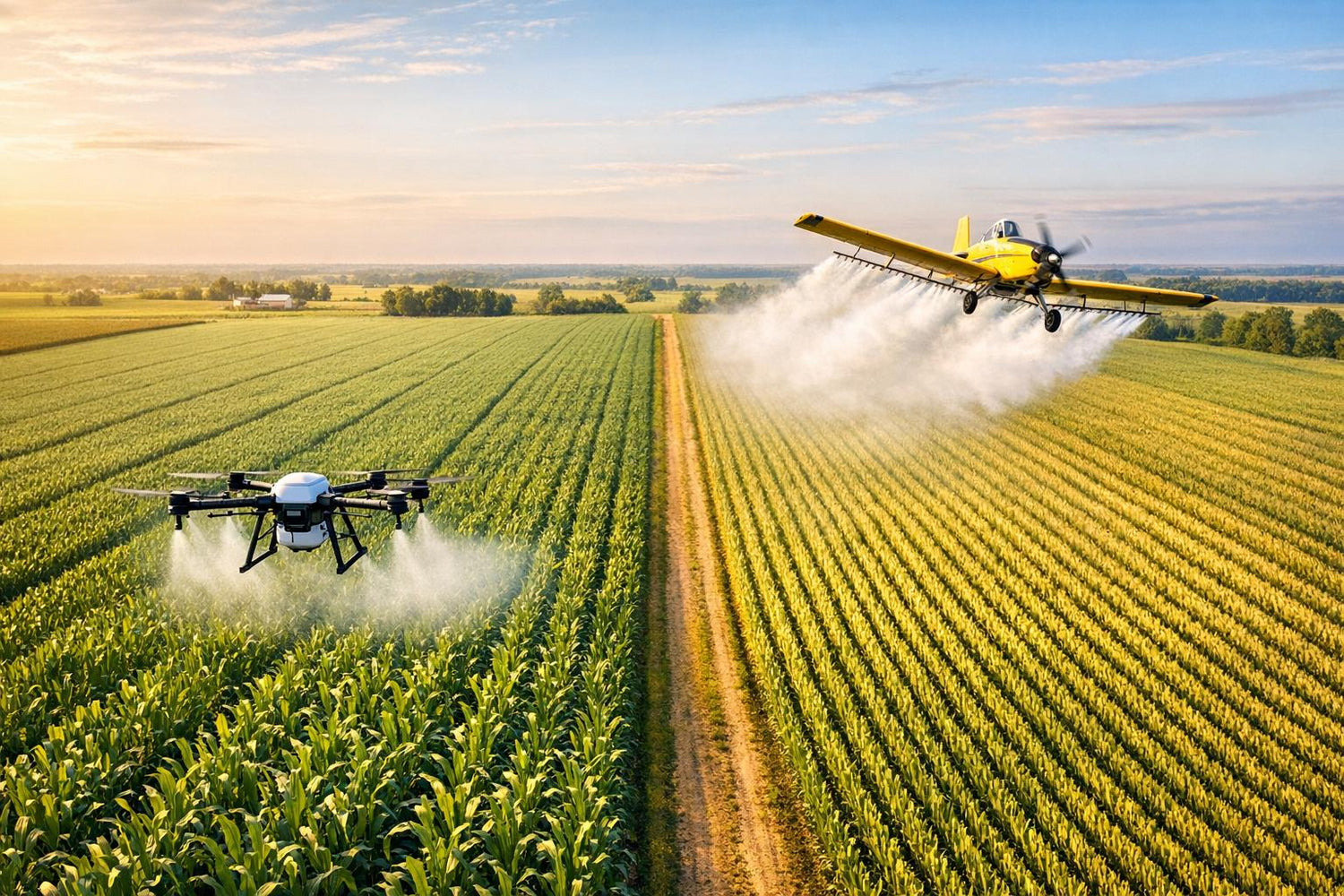
Which is cheaper: spray drones or crop dusters? Spray drones, like the DJI Agras T100, cost significantly less upfront and have lower operating expenses compared to crop dusters. A fully equipped spray drone system costs around $119,999, while a crop duster setup can exceed $1,000,000. On a per-acre basis, drones also save money, with operating costs ranging from $2.64 to $3.37 per acre versus the $12.50 per acre charged for crop duster applications. However, crop dusters are faster for large-scale operations, covering more ground in less time.
Key Takeaways:
- Initial Costs: Spray drones (~$119,999) are about 10% of a crop duster's cost (~$1,000,000+).
- Operating Costs: Spray drones ($2.64–$3.37/acre) are cheaper than crop dusters ($12.50/acre).
- Flexibility: Drones excel in smaller, irregular fields and nighttime spraying.
- ROI: Drones break even faster, especially for smaller farms or custom operators.
Quick Comparison
| Factor | Spray Drone (DJI Agras T100) | Crop Duster |
|---|---|---|
| Initial Cost | ~$119,999 | $1,000,000+ |
| Per Acre Cost | $2.64–$3.37 | ~$12.50 |
| Insurance | Lower | Higher |
| Licensing | FAA Part 107 | Commercial Pilot License |
| Field Suitability | Small/irregular fields | Large, open fields |
| Speed | Slower | Faster for large areas |
Spray drones are a cost-effective choice for smaller farms or custom operators, while crop dusters are better for large-scale, contiguous operations.
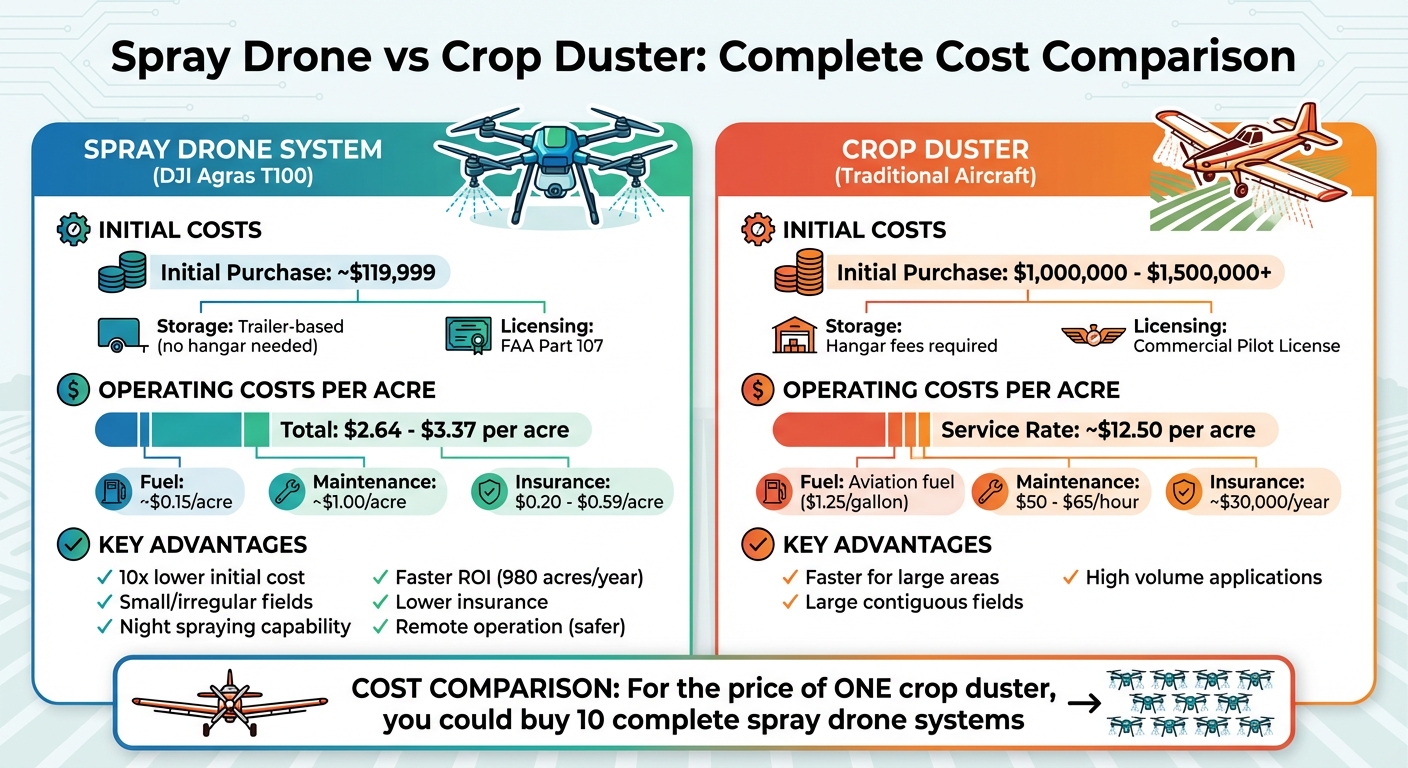
Spray Drone vs Crop Duster Cost Comparison Infographic
What Crop Dusters Cost to Own and Operate
Initial Purchase and Setup Costs
The price tag for agricultural planes varies widely. Basic models start at around $100,000, while high-end aircraft can exceed $2,000,000. If you're considering a used turbine model, expect to pay an average of $650,000. But the spending doesn’t stop there. Setting up your operation comes with additional costs like hangar space, ground support vehicles, and necessary licensing, which can push total initial expenses past $1,000,000. Financing often involves a 10% down payment, with interest rates hovering near 5.5%.
And while these upfront costs are steep, they’re only the beginning. Operating a crop duster brings its own set of financial challenges.
Recurring Operating Expenses
Once you're set up, the ongoing costs of running a crop duster can add up quickly. Liability insurance for commercial coverage alone averages about $30,000 per year. Maintenance, which includes airframe and engine repairs along with regular upkeep, typically costs between $50 and $65 per hour. On top of that, professional pilots charge approximately $300 per hour, and with most operations requiring about 500 flight hours annually, this becomes a major expense. Ground operations tack on another $25,000 annually.
Fuel is another significant factor. Aviation fuel averages $1.25 per gallon, and you’ll also need to account for the cost of ferrying the aircraft between fields. Despite these hefty expenses, aerial applicators generally charge around $12.50 per acre for fungicide applications.
This high-cost structure - driven by expensive equipment, specialized labor, and strict regulatory requirements - means operators must handle large volumes to stay profitable. For this reason, many farmers are exploring alternatives like the DJI Agras T100, which offers a more budget-friendly solution for crop spraying.
What the DJI Agras T100 Spray Drone System Costs
Initial Purchase and Setup Costs
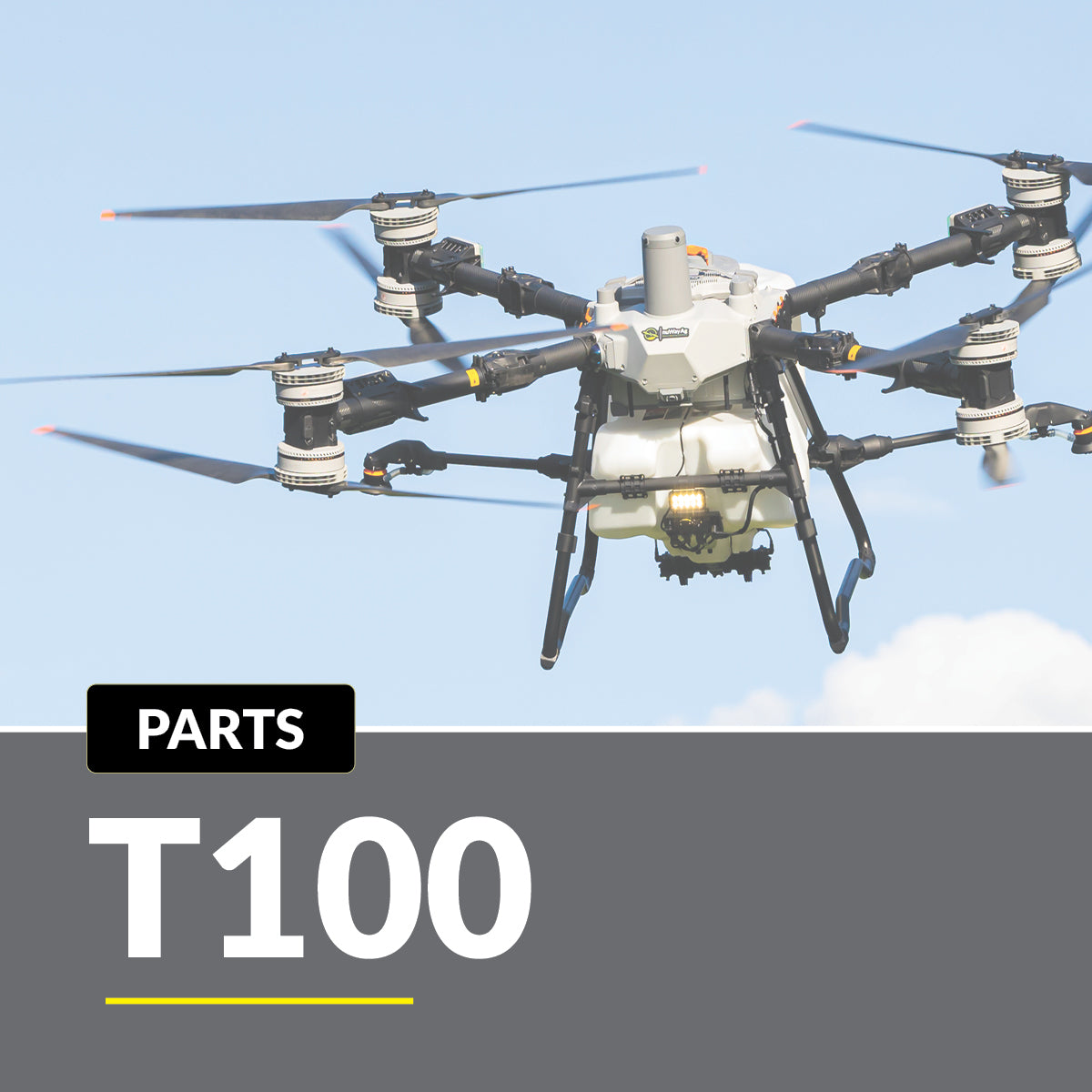
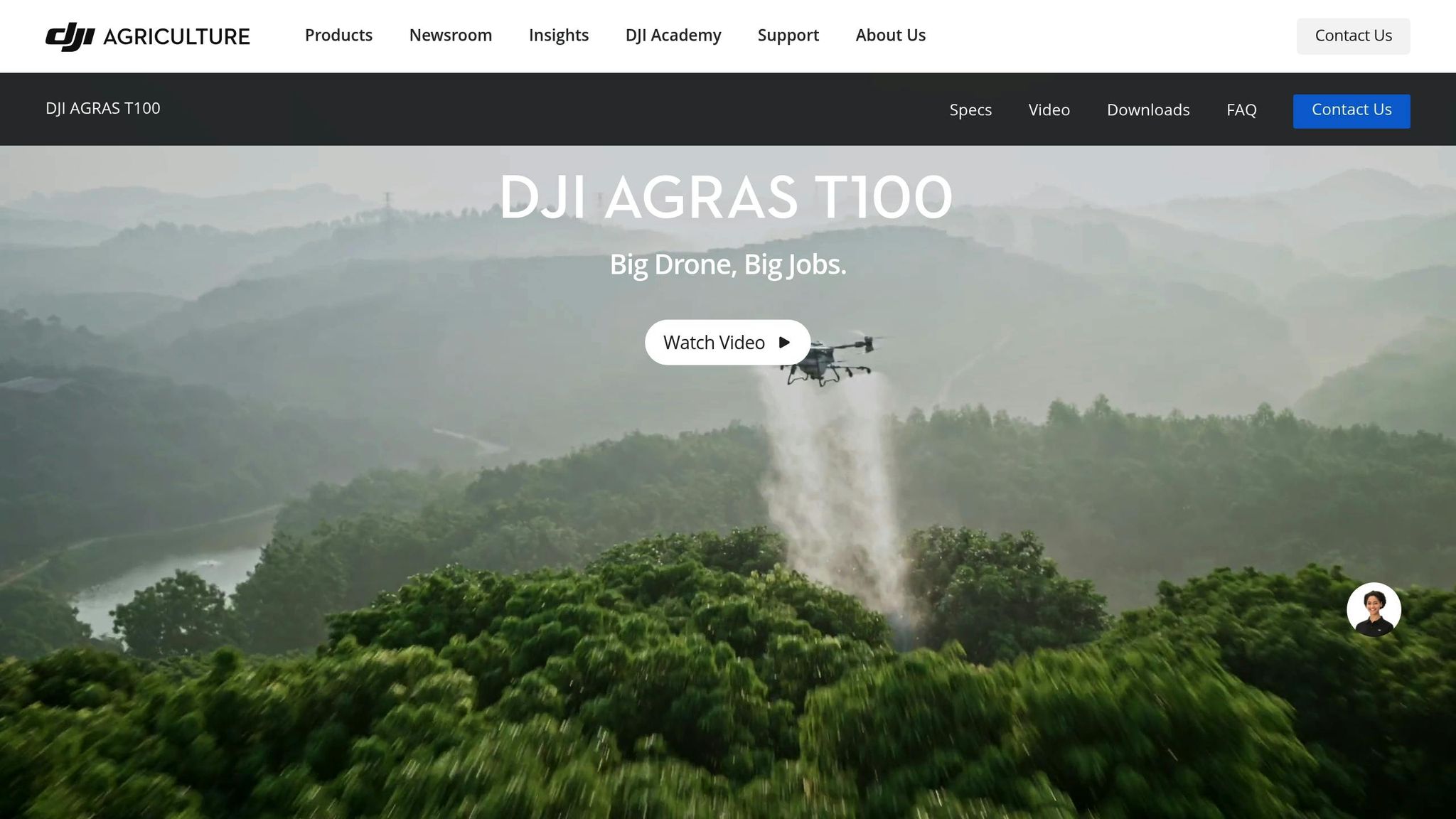
The DJI Agras T100 comes in three configurations tailored to different needs. The most basic kit starts at $25,456 and includes the airframe, RC Plus 2 remote controller, spray system, and cooling station. For a more complete setup, the charger bundle is priced at $39,999. The turnkey generator bundle, which adds three flight batteries and a DJI generator, costs $43,999.
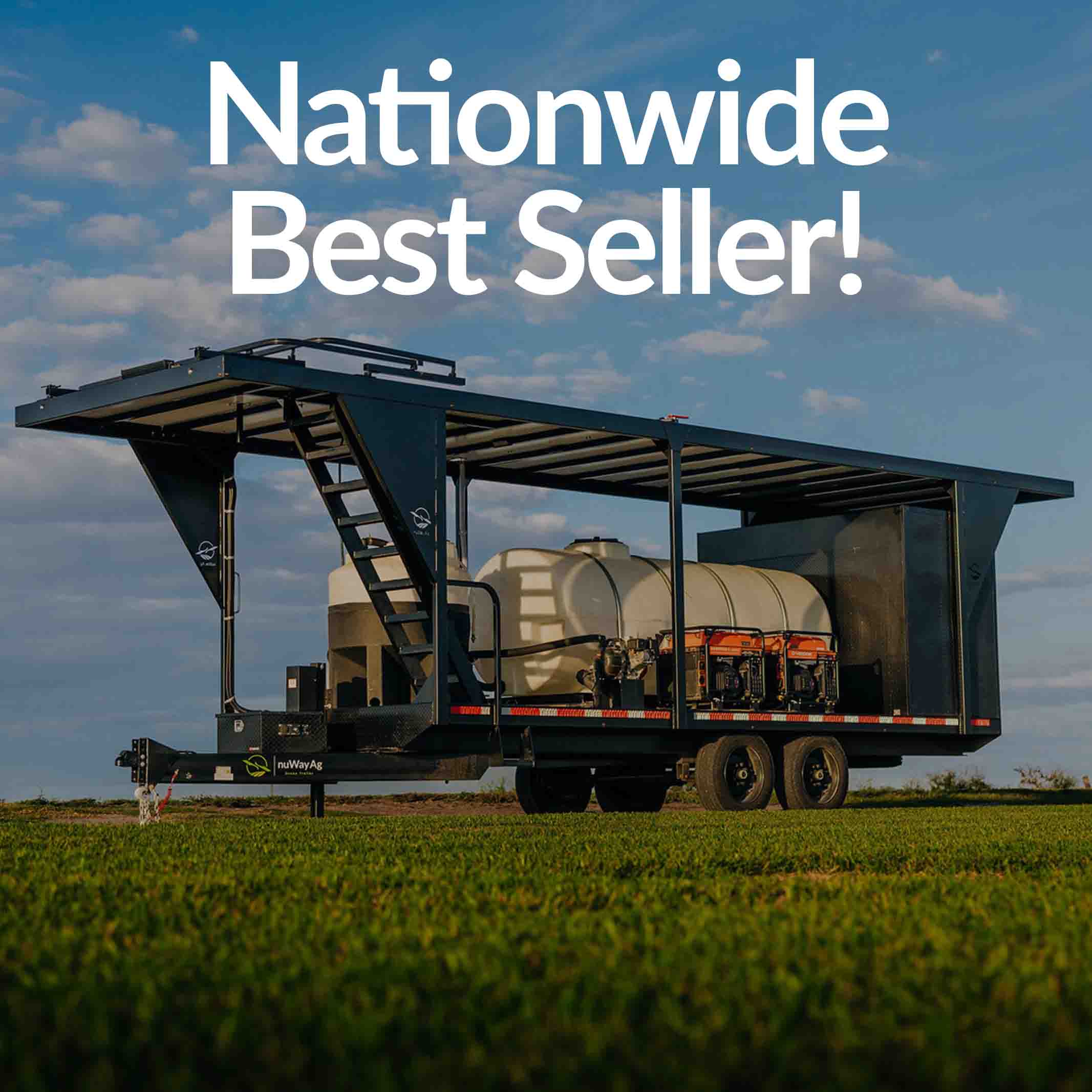
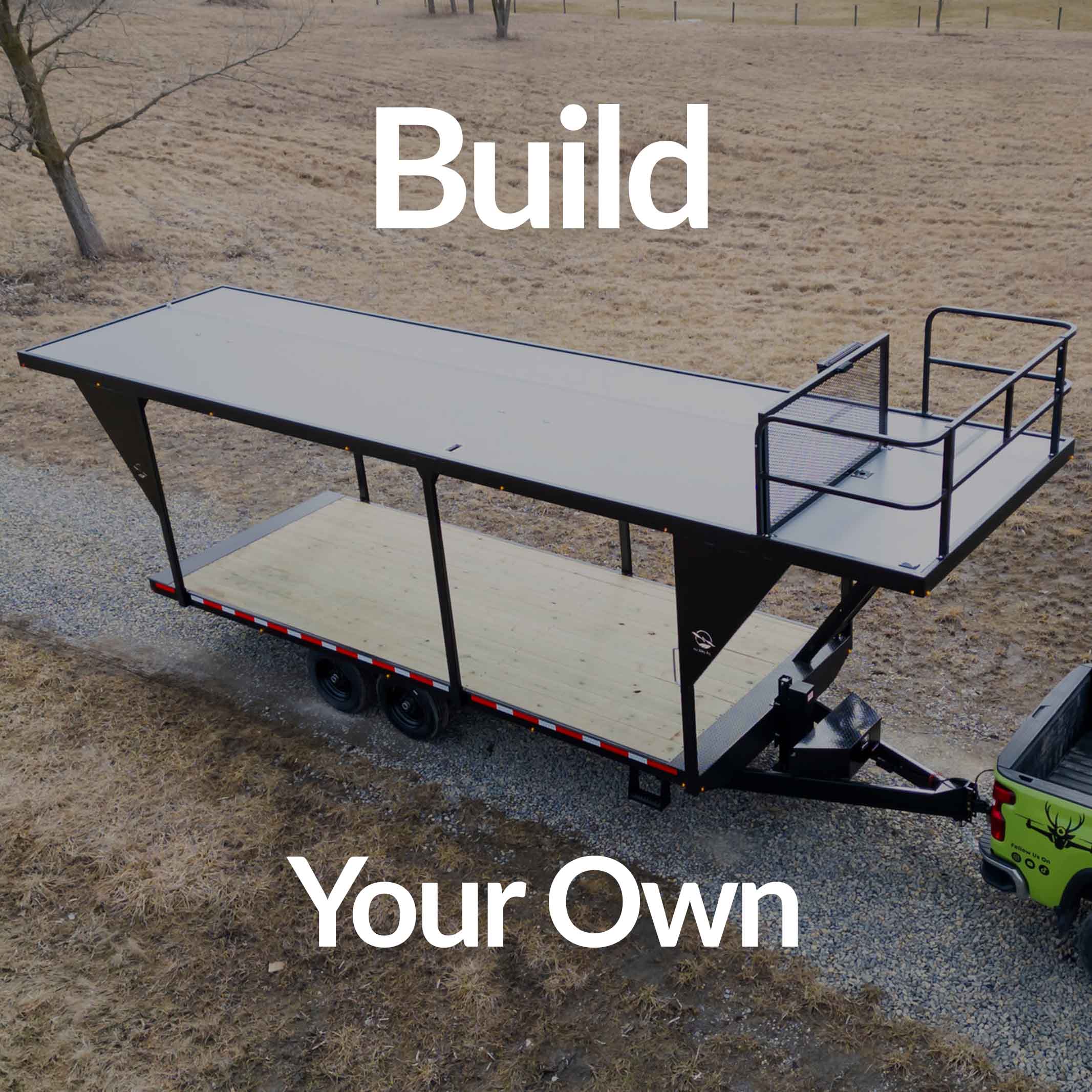
To create a fully mobile spray system, you can add NuWay Ag's specialized trailers. The 2025 Standalone Trailer, priced at $31,999, features a 22-foot deck-over design and a 32-foot composite flight deck. For a more advanced setup, Mike's Loadout costs $41,950 and includes a 1,000-gallon tank, a 175-gallon induction tank, a Honda GX 160 pump, and complete plumbing.
Depending on the configuration you choose, a two-drone system with a trailer can cost anywhere from $82,000 to $130,000. Every purchase from NuWay Ag also includes a full day of personalized training at their Dundee, Ohio headquarters. They’ll guide you through multi-step compliance for FAA Part 107 and Part 137 certifications.
Recurring Operating Expenses
When it comes to ongoing costs, the T100 system is significantly more affordable than traditional crop dusting methods. Fuel for the generator costs approximately $0.15 per acre. Routine maintenance and repairs average about $1 per acre applied, which translates to roughly $1,000 annually for a 1,000-acre operation. Other expenses, such as insurance, taxes, and storage, typically range from $0.20 to $0.59 per acre.
One of the larger recurring costs is battery replacement. T100 batteries last for around 1,000 charge cycles or roughly five years, with replacement batteries costing about $2,500 each. When you account for fuel, labor, maintenance, and battery depreciation, total operating expenses generally fall between $2.64 and $3.37 per acre.
Future of agricultural spraying: Spray Drones or Airplanes?
sbb-itb-3415cd9
Direct Cost Comparison: Crop Duster vs T100 Drone
After examining setup and operating expenses in detail, let’s directly compare the financial practicality of traditional crop dusters versus the T100 drone system.
Side-by-Side Cost Comparison
Traditional crop dusters come with a hefty price tag. Just getting started with one can cost between $1,000,000 and $1,500,000 or more. On top of that, you’ll need to cover aviation insurance, hangar fees, and obtain a commercial pilot's license.
Meanwhile, the DJI Agras T100 system, when paired with NuWay Ag's trailer setup, costs approximately $119,999. For the price of a single crop duster, you could afford at least 10 fully equipped spray drone systems.
| Cost Factor | Traditional Crop Duster | DJI Agras T100 System |
|---|---|---|
| Initial Purchase | $1,000,000 – $1,500,000+ | ~$119,999 |
| Storage | Hangar fees required | Trailer-based (no hangar) |
| Licensing | Commercial pilot's license | Part 107 & State Applicator Licensing |
| Maintenance | High/complex aviation standards | Limited maintenance (~$1.00/acre) |
| Insurance | Expensive aviation premiums | Lower costs ($0.20–$0.59/acre) |
| Fuel/Energy | Expensive aviation fuel | Generator fuel (~$0.15/acre) |
When you break it down further, the cost differences become even clearer on a per-acre basis.
Cost Per Acre Analysis
On a per-acre level, the T100 system offers clear savings in operating costs. Its expenses - such as generator fuel (around $0.15 per acre) and maintenance (approximately $1.00 per acre) - add up to just $2.64 to $3.37 per acre.
Custom hire rates also highlight this cost advantage. While the average application rate is about $16.00 per acre for drones and $12.50 per acre for crop dusters, farmers generally pay similar rates regardless of the equipment. However, drone systems shine when it comes to lower delivery costs. For custom operators spraying 4,000 acres annually, the cost per acre can drop to roughly $7.39.
These lower costs directly contribute to a faster return on investment.
Return on Investment Comparison
The lower upfront costs of the T100 system make it easier to achieve a quick ROI. For farm owners, the system becomes cost-effective after treating just 980 acres annually. If you’re a custom operator, you can cover monthly payments by spraying fewer than 250 acres per month.
Additionally, drones open up revenue opportunities that traditional aircraft often pass on. Manned aerial application companies frequently refer smaller or hard-to-access fields to drone operators because these jobs aren’t profitable for fixed-wing aircraft. Handling these irregularly shaped or obstructed fields can create extra income streams, further speeding up your ROI.
It’s worth noting that spray drones are considered "electronic consumables", much like laptops. They depreciate as technology advances, making it essential to realize your ROI promptly. Fortunately, with T100 batteries lasting around 1,000 charge cycles - or roughly five years - and the ability to operate both day and night, you have plenty of opportunities to maximize returns before the equipment becomes outdated.
Safety and Flexibility Advantages of Spray Drones
Spray drones offer more than just cost savings - they bring notable safety benefits and operational flexibility that make them a valuable tool in modern agriculture.
Safety and Risk Differences
One of the standout advantages of spray drones is the elimination of pilot risk. Traditional crop dusters require pilots to fly at dangerously low altitudes, navigating obstacles like power lines, trees, and uneven terrain. This puts human lives at significant risk. In contrast, systems like the T100 allow operators to control drones remotely from a safe location, such as a specialized drone trailer, keeping them far from hazardous conditions.
This shift also results in lower insurance costs. Drone insurance is generally much more affordable than coverage for manned aircraft. Additionally, drones are incredibly agile, enabling them to maneuver around obstacles that would pose serious challenges for traditional crop dusters.
When and Where Drones Can Operate
Spray drones shine in scenarios where manned crop dusters struggle or simply cannot operate. For example, drones are ideal for treating small fields (as little as 7 acres), irregularly shaped parcels, or steep terrains that are typically avoided by manned aircraft. They are also highly efficient in these challenging conditions, covering between 300 and 500 acres per day, even in fragmented or "chopped up" parcels.
The T100 drone's LED lighting further expands its capabilities by enabling safe night spraying. This feature not only extends operational hours but also reduces off-target drift, improving application precision. According to Chris Burbach, a Precision Agriculture Instructor at Northeast Community College, drones "can keep a closer proximity to the crop canopy", making them particularly effective for late-season applications of fungicides or insecticides. These unique operational advantages complement the financial benefits discussed earlier.
Licensing and Compliance Requirements
Operating a traditional crop duster requires a commercial pilot's license - a process that is both time-intensive and costly. Spray drones, on the other hand, require only FAA Part 107 certification and state applicator licensing. The registration process involves seven steps across state and FAA levels, but it’s far more accessible than the requirements for manned aircraft. Companies like NuWay Ag simplify this process with their "white glove" compliance support, helping operators become proficient in just a matter of days instead of years.
Conclusion: Which Option Makes Financial Sense
Looking at the numbers and operational details, the financial choice becomes pretty straightforward. A full T100 spray drone system costs less than $100,000, while a traditional crop duster requires an investment exceeding $1,000,000 - that’s about a 10-to-1 difference in upfront costs. To put it another way, for the cost of one manned aircraft, you could buy 10 complete drone trailer setups from NuWay Ag. This not only saves money but also provides greater flexibility and backup options.
For small to medium-sized farms, the T100 system is a smart economic choice. If you’re covering 1,000 acres annually, the cost per acre comes out to roughly $12.27, making it competitive with the $12.50 per acre typically charged for crop duster fungicide applications. Plus, the T100 achieves a quicker return on investment, requires only minimal licensing (FAA Part 107), and avoids the hefty costs of hangar space and specialized maintenance.
Spray drones also shine in areas where crop dusters struggle - like irregularly shaped fields, steep terrain, or smaller plots. They’re especially effective for late-season applications or nighttime spraying, where timing can make all the difference.
That said, crop dusters still have their place. If you’re managing thousands of contiguous acres and need to apply large volumes per acre quickly, traditional aircraft can cover more ground in less time than a small drone fleet.
FAQs
How do spray drones perform on challenging terrains compared to crop dusters?
Spray drones like the DJI T100, combined with NuWay Ag’s trailer system, shine when it comes to navigating tough landscapes. These drones can hover, fly low to the ground, and weave around obstacles like trees, hills, and narrow patches of land. This makes them perfect for spraying steep slopes, rugged pastures, or uneven fields where traditional crop-dusting planes simply can't operate safely. Plus, drones can take off from portable trailers, eliminating the need for a runway or a large, flat area.
On the other hand, crop-dusting planes come with limitations. They require long, flat runways for takeoff and landing, and their higher speeds and wide turning radii make them less effective on hilly or fragmented terrain. Drones also bring an added advantage: the ability to spray at night. This extra flexibility makes them a safer and more efficient choice for handling challenging topography.
What are the maintenance requirements for spray drones over time?
Maintaining a spray drone is all about keeping it in top shape for safe, reliable, and efficient operation. Regular inspections and upkeep are key. Start by checking the airframe, motors, and propellers for any signs of wear or damage. Batteries also need attention - typically, they should be replaced every 1–2 years as their capacity diminishes. The spray system, including tanks, pumps, filters, and nozzles, should be cleaned and calibrated regularly to avoid clogs and ensure precise spraying.
Don’t overlook software updates. Keeping the firmware and flight-control software up to date is essential for smooth operation. If your setup includes a power unit or generator, routine maintenance like oil changes and filter replacements is necessary to keep everything running efficiently. Many operators also maintain detailed logs of their maintenance activities, which can be crucial for meeting insurance and regulatory requirements.
While these upkeep tasks come with predictable costs, they’re a worthwhile investment. Proper maintenance not only extends the life of your drone but also ensures it continues to perform at its best.
How do spray drones compare to crop dusters for large-scale farming?
Spray drones, like the DJI-based T100 offered by NuWay Ag, provide a smart, budget-friendly alternative to traditional crop dusters for large-scale farming. While crop dusters can carry a hefty price tag of over $2 million, a two-drone setup - including a NuWay Ag trailer - costs around $100,000 to $130,000. This significantly lower investment allows farmers to deploy multiple drones, expanding their coverage without taking on major financial risks.
A single T100 drone is capable of covering approximately 52 acres per hour. When paired with a trailer system - complete with batteries, a spray tank, and a generator - farmers can operate multiple drones at once, making it easier to manage the demands of large-scale farms. Drones also bring unique perks to the table, such as night spraying, which works well in calm wind conditions, and low-altitude precision, which minimizes chemical drift and ensures more accurate application. On top of that, drones eliminate the safety hazards tied to manned aircraft and come with much lower insurance and maintenance costs.
With their ability to scale, deliver precise results, and adapt to various needs, spray drones offer a practical and cost-conscious solution for farmers aiming to streamline their operations while cutting down on expenses and risks.